



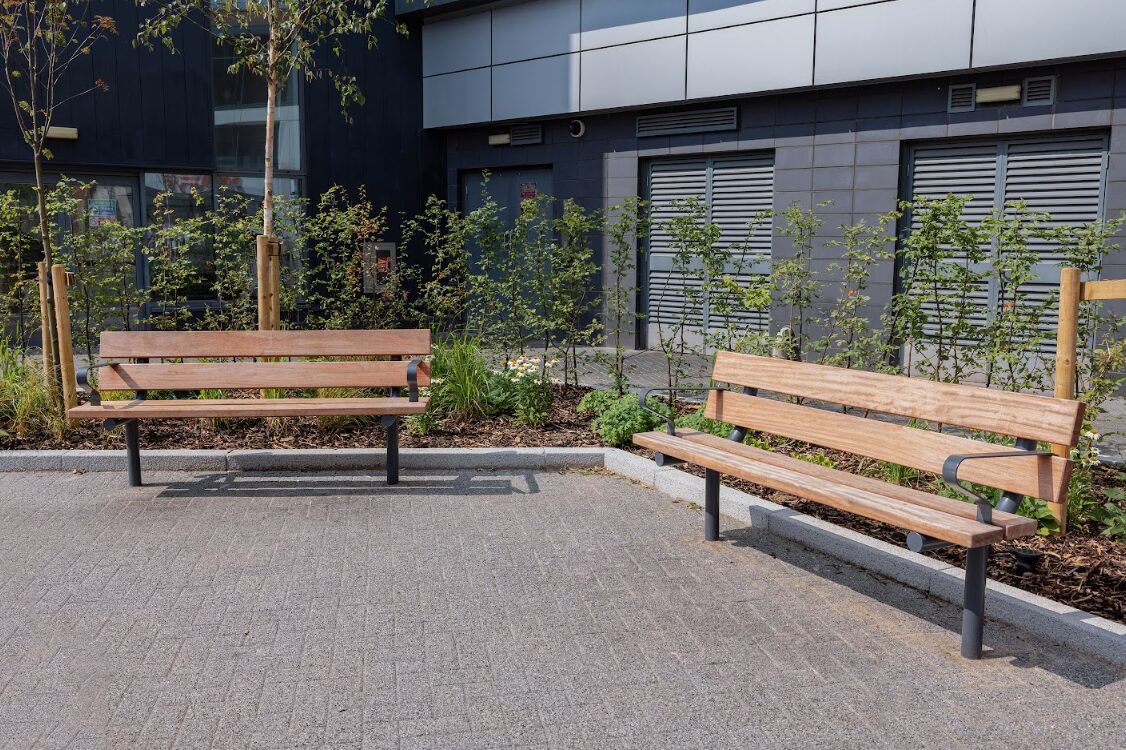
How Should Local Councils, Universities and Commercial Landlords Maintain Outdoor Seating?
Public and commercial outdoor seating is a significant capital investment for local councils, universities, healthcare facilities, and commercial developers; whether specified for a bustling university campus, a hospital courtyard, or a high-footfall urban promenade, public furniture faces continuous exposure to the elements, heavy daily usage, and potential vandalism.
As such, implementing a proactive outdoor seating maintenance checklist is the most effective way to protect and preserve this investment long term and beyond. Routine street furniture maintenance directly extends product lifespans, reduces long-term replacement costs, and ensures both public safety and satisfaction.
Outdoor seating maintenance is the process of routinely inspecting, cleaning and repairing public benches, seating systems and street furniture to maximise lifespan, maintain safety and reduce replacement costs.
This street furniture maintenance checklist outlines the key inspection and cleaning tasks needed to keep outdoor seating safe, functional and visually appealing throughout the year.
What Is the Best Way to Maintain Outdoor Seating?
The best way to maintain outdoor seating is through a routine inspection programme that includes monthly cleaning, stability checks, fixings inspections, and material-specific maintenance. Regular maintenance helps extend product lifespan, improve public safety, and reduce long-term replacement costs.
Outdoor Seating Maintenance Checklist
- Remove leaves, dirt and debris monthly
- Inspect for vandalism and graffiti
- Check bench stability and fixings
- Inspect timber for splinters and splits
- Examine metal finishes for chips or corrosion
- Clear drainage holes to steel frames before winter
- Apply timber finishes where applicable
Who Is Responsible for Outdoor Seating Maintenance?
In most public-sector and commercial environments, responsibility for outdoor seating maintenance typically sits with facilities management teams, estate managers, local authority maintenance departments or contracted maintenance providers. Inspection schedules should be documented and carried out in accordance with the organisation’s health and safety procedures.
What Should Be Included in an Outdoor Seating Maintenance Checklist?
To maximise life expectancy and structural integrity, facilities managers and property teams should implement a tiered inspection schedule. The frequency is dependent on the usage and environment, but best practice is recommended here.
What Monthly Outdoor Seating Checks Should You Carry Out?
Surface Cleaning: Clear away any organic debris, fallen leaves, and litter that can trap moisture against materials.
Vandalism & Graffiti Assessment: Identify and treat graffiti early, as fast removal not only keeps the area visually appealing but actively deters further antisocial behaviour.
Stability Test: Check for any structural movement or rocking that could indicate loose ground fixings.
What Should Be Checked During a Bi-Annual Outdoor Seating Inspection?
Hardware & Fixings: Inspect all bolts, brackets, and anchoring systems, and tighten any components that might have become loosened by thermal expansion or high-frequency vibration.
Structural Integrity: Examine load-bearing frames for any signs of stress, deep impact damage, or structural shifts.
Splinter & Sharp Edge Audit: Run physical checks along timber slatted benches to identify shakes (natural splits) that could snag clothing or cause minor injuries.
How Should You Maintain Different Outdoor Seating Materials?
Different materials require distinct approaches to preserve their design-life and tailoring your care regime to the specific material composition of your durable outdoor seating solutions helps to prevent premature degradation.
How Do You Maintain Timber Outdoor Seating?
Timber brings natural warmth to urban spaces, but it is an organic material that reacts to its environment.
The Silver Aesthetic vs. Color Preservation: Over time, timbers like Iroko or Class 4 Treated Redwood naturally weather to a classic silvery-grey hue. This does not affect structural durability. Where a stain has been applied to the finished product, an annual coating of the same stain should be undertaken if you prefer to retain the original tones. Hardwood is given a single coat of UV protection oil, which can be reapplied annually.
Cleaning: Wash down timber surfaces using a soft-bristle brush and mild soapy water to remove algae and dirt. Avoid high-pressure jet washing at close range, as this can erode the soft grain fibres of the wood.
How Do You Maintain Recycled Plastic Outdoor Seating?
As a highly sustainable, circular material alternative, recycled plastic is exceptionally low-maintenance.
Zero Rot Care: Unlike timber, recycled plastic does not absorb moisture, meaning it will not rot, split, or require chemical treatments.
Wipe-Down Maintenance: Maintenance is restricted to cosmetic cleaning, so an annual clean using a mild detergent and rinsing with clean water is usually sufficient to remove surface dirt, atmospheric pollution, or bird droppings.
How Should Steel Outdoor Seating Be Maintained?
Metal street furniture offers exceptional structural longevity but must be monitored for surface damage.
Powder-Coating Assessments: Galvanised powder-coated (GPC) finishes provide excellent weather protection and colour customisation. Metalwork should be cleaned annually to remove build up of dirt using a mild detergent; make sure to check for deep scratches or chips caused by skateboards or bags.
Corrosion Prevention: Address damage in the powder coating promptly. Damaged areas of galvanising should be treated with an anti-rust zinc-based product and damaged paint finishes should be touched up using matching specialist paint to prevent oxygen and moisture from reaching the underlying steel, mitigating the risk of localised rust.
How Should Outdoor Seating Be Maintained Throughout the Year?
The UK weather presents unique challenges across the seasons. Adapting your checklist ensures year-round resilience.
How Can You Prepare Outdoor Seating for Spring and Summer?
High UV exposure can degrade finishes, while increased footfall raises the risk of accidental damage; spring is the ideal window to apply protective oils to timber elements and complete aesthetic paint touch-ups before inevitable peak summer usage.
How Can You Protect Outdoor Seating During Autumn and Winter?
The combination of persistent damp, frost, and freezing cycles can accelerate material splitting if moisture gets trapped in micro-cracks, so during Autumn ensure all drainage holes in metal frameworks are clear of autumn leaves, this will help to prevent internal water pooling and subsequent freezing damage.
Why Is Low-Maintenance Outdoor Seating Worth the Investment?
Of course, the easiest way to maintain outdoor benches efficiently is to specify high-quality materials from the start; partnering with a manufacturer that prioritises robust design, commercial-grade fixings, and premium material treatments drastically reduces the pressure on your long-term maintenance budgets.
Outdoor Seating Case Study: How Coombe Wood School Eliminated Ongoing Maintenance
When specifying street furniture for heavy-use educational environments, balancing aesthetic appeal with long-term maintenance budgets is a critical challenge and, at Coombe Wood School in Croydon, we demonstrated how strategic material selection can eliminate the ongoing maintenance burden for facilities teams.
Working in partnership with main contractor Wates Construction, the team at Langley Design manufactured and installed a series of plinth-mounted Langley LBN114 benches to provide external seating and social spaces for the school’s students.
What Made This a Low-Maintenance Outdoor Seating Solution?
Recycled Plastic Slats: Rather than traditional timber, the benches were specified with recycled plastic slats. This material choice ensures the seating is completely impervious to moisture, rot, and insects, meaning it requires zero chemical treatments, staining, or sanding over its lifecycle.
Plinth-Mount Engineering: By utilising heavy-duty concrete plinths, the benches are resin-bonded directly to the finished floor level. This surface-mount design eliminates the need for underground foundations, preventing ground-level moisture traps and making surface cleaning around the furniture incredibly simple.
Ultimately, this case study highlights that by choosing high-quality recycled plastic, the school secured a durable outdoor seating solution that requires no maintenance and will continue to look as good as new in many years to come, offering the client total peace of mind for the lifetime of the project.
Why Trust Langley Design?
For more than 30 years, Langley Design has designed, manufactured and installed outdoor seating, street furniture and landscaping products for projects across the UK for local authorities, universities, healthcare environments and commercial developments.
Our experience in designing seating solutions for high-footfall public environments has informed the recommendations within this guide.
Frequently Asked Questions About Outdoor Seating Maintenance
How often should outdoor benches be inspected?
Outdoor benches should be visually inspected every month and undergo a more detailed structural inspection at least twice a year.
How often should timber outdoor seating be treated?
The frequency depends on the timber species, exposure levels and desired appearance, but many external timber seating systems benefit from annual treatment to preserve their original colour.
Does recycled plastic outdoor seating require maintenance?
Recycled plastic seating requires very little maintenance. It does not rot, split, or require painting and generally only needs occasional cleaning.
How long does outdoor seating last?
The lifespan of outdoor seating depends on materials, installation method and maintenance. High-quality steel and recycled plastic seating can remain serviceable for decades when properly maintained.
What causes outdoor seating to deteriorate?
The most common causes include moisture ingress, UV exposure, corrosion, vandalism, loose fixings and lack of routine maintenance.
Which outdoor seating material requires the least maintenance?
Recycled plastic is generally considered one of the lowest-maintenance materials because it is resistant to rot, moisture, insects and weathering.
Looking for Durable, Low-Maintenance Outdoor Seating for Your Next Project?
At Langley Design, we leverage 30 years of experience as a street furniture manufacturer to provide premium, durable outdoor seating solutions across the UK.
Our dedicated team works directly with architects, councils, and contractors to provide tailored technical support, custom layouts, and product configurations to match both your aesthetic intent and your long-term maintenance capabilities.
Explore our extensive portfolio of completed projects across the UK, or get in touch with our team today to discuss your specific project requirements.