



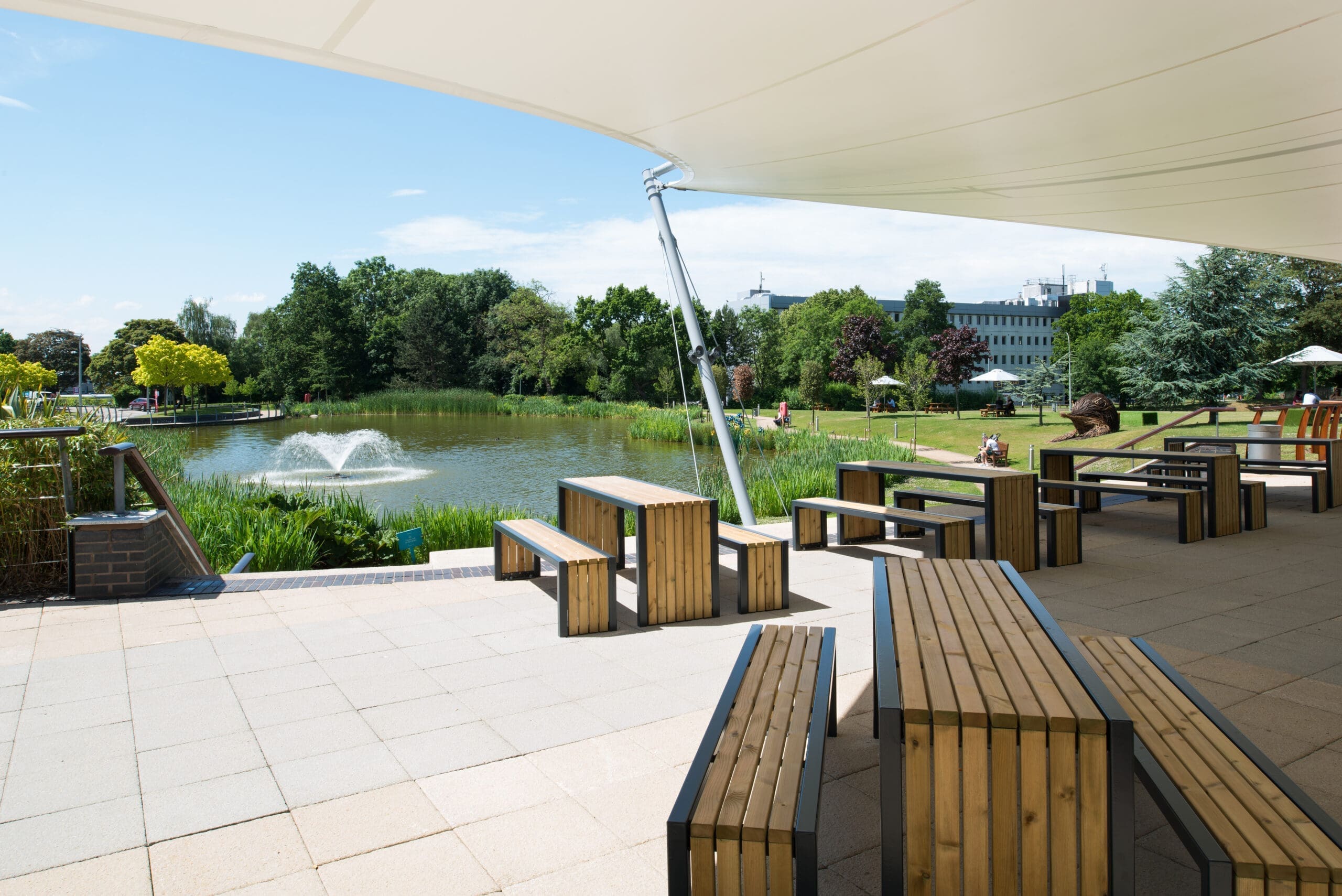
Designing Outdoor Spaces with Nature in Mind
As towns, cities and shared outdoor spaces continue to evolve, the materials we choose for outdoor furniture matter more than ever; street furniture is no longer just about durability and visual appeal – it plays an active role in supporting biodiversity, responding to climate responsibility and creating places people genuinely want to spend time.
International Day of Forests on 21st March is a timely opportunity to look at how forest-friendly materials can shape better outdoor projects.
At Langley Design, sustainability is central to how we design and manufacture outdoor furniture, from wooden benches and picnic bench tables to bespoke seating solutions for the public realm.
By choosing responsibly sourced timber and designing for long-term performance, street furniture can support biodiversity, reduce environmental impact and help outdoor spaces feel more natural, welcoming and human.
Supporting Biodiversity Through Material Choice
Forests are essential to biodiversity, climate regulation and healthy ecosystems. When timber is responsibly sourced, it becomes a renewable material that supports forest management rather than contributing to deforestation.
Using certified, sustainably managed timber helps protect wildlife habitats, encourages replanting and ensures forests can thrive for future generations. For outdoor projects, this allows designers and specifiers to balance environmental responsibility with strength, durability and aesthetic warmth.
At Langley Design, the materials used in our wooden benches, picnic tables, outdoor seating and covered shelters and structures are carefully selected for their resilience and suitability for long-term outdoor use.
Combined with robust steel or concrete elements, these materials create outdoor furniture that performs reliably while maintaining a strong connection to the natural environment.
Green roof cycle shelters are also becoming increasingly more popular which combines responsibly sourced timber with living roof systems to create a practical infrastructure that actively enhances biodiversity.
Durable Outdoor Furniture Designed to Last
True sustainability goes beyond material sourcing. Longevity is just as important. Well-designed outdoor furniture reduces the need for frequent replacement, helping minimise waste and long-term environmental impact.
Forest-friendly timber offers excellent durability when detailed and finished correctly. As it weathers, it develops character rather than deterioration, making it ideal for public spaces such as parks, campuses, housing developments and civic areas.
From picnic benches and tables designed for communal dining to timber seating used in educational or workplace settings, durability and responsible material choice work together to create furniture that continues to perform year after year.
When constructed using certified, sustainably managed timber, cycle shelters align with the same forest-friendly principles as wooden benches and picnic tables. The addition of a green roof introduces planting that provides habitat for pollinators, supports urban biodiversity and contributes to improved air quality. Sedum or wildflower roof systems can help absorb rainfall, reduce surface water runoff and mitigate the urban heat island effect, all while softening the visual impact of built elements within a scheme.
Enhancing Aesthetics and User Experience
Forest-friendly materials do more than perform well outdoors. They shape how a space feels and how people choose to use it. Timber, in particular, brings a natural warmth that helps outdoor environments feel calmer, more comfortable and more inviting.
Creating visual warmth: Natural timber introduces texture, tonal variation and character that manufactured finishes often lack. This softness helps public spaces feel less rigid and more human, encouraging people to slow down and engage with their surroundings.
Encouraging everyday use: Wooden benches and picnic tables naturally invite people to pause. In schools, workplaces and community spaces, they create informal places for rest, conversation and connection, supporting wellbeing through simple, everyday moments outdoors.
Connecting people with nature: When combined with planting and open layouts, forest-friendly materials help balance the built environment with natural elements. The result is outdoor furniture that supports both people and nature, creating spaces that feel considered, grounded and easy to spend time in.
A Practical Approach to Sustainable Outdoor Design
Sustainable outdoor furniture must also meet practical demands. Products need to withstand daily use, changing weather conditions and long-term exposure without compromising safety or comfort.
That’s why Langley Design combines responsibly sourced timber with proven construction methods and durable supporting materials. Our picnic tables and benches are designed to perform in real-world environments while aligning with wider environmental goals.
Whether part of a public realm scheme, educational campus or community space, each piece of outdoor furniture is designed with care, functionality and sustainability in mind.
Designing Outdoor Furniture with Care and Responsibility
Green design is about making considered choices that have lasting value. By selecting forest-friendly materials and designing outdoor furniture that lasts, projects can make a positive contribution to biodiversity, user wellbeing and the long-term quality of shared spaces.
At Langley Design, we’re proud to support sustainable outdoor projects through responsible sourcing, thoughtful design and picnic tables and benches built for everyday use.
Explore our range of wooden benches, picnic bench tables and outdoor furniture to see how forest-friendly materials can help shape resilient, welcoming public spaces.