by Mike Bloxsome, Technical Director at Langley Design
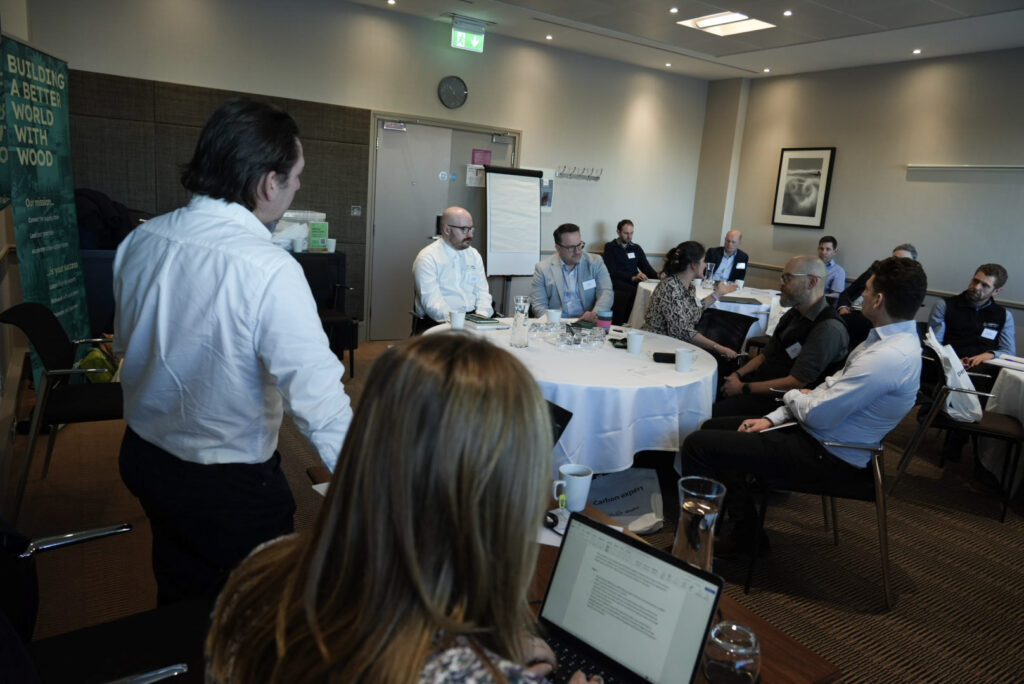
On 19 March 2026, Mike Bloxsome joined industry leaders, specifiers, and manufacturers at the TDUK / One Click LCA Embodied Carbon Roundtable in Birmingham to tackle one of the most important challenges facing the built environment today: how we measure, manage and reduce embodied carbon.
What emerged was clear – this is no longer just a compliance issue. It’s a defining opportunity for organisations ready to lead.
A Market Shift You Can’t Ignore
The UK construction industry is moving rapidly into a new era of accountability. With evolving Construction Product Regulations and increasing alignment with frameworks like BREEAM Version 7 and SKA Offices 2.0, the expectation for transparent, high-quality carbon data is now becoming both a legal and commercial necessity.
Add to this the momentum behind the Timber in Construction Roadmap and the anticipated direction of Part Z, and the trajectory is unmistakable: whole-life carbon assessment is becoming embedded into standard practice.
For forward-thinking organisations, this represents more than risk – it’s a chance to differentiate.
Turning Strategy into Action
What made this session particularly valuable was its focus on delivery – practical application rather than high level policy. The conversation has moved on from why embodied carbon matters. The real question now is: how do we make it work efficiently and consistently in practice?
This is where competitive advantage will be won. Not in policy discussions, but in the ability to implement practical, scalable solutions across the supply chain.
Simplifying the Data Challenge
Data remains one of the biggest barriers, but also one of the biggest opportunities. One of the most engaging parts of the conversation revolved around data, specifically:
- What level of material data is actually required?
- Are we overcomplicating assessments with excessive detail?
- Where do Environmental Product Declarations (EPDs) fall short?
There was a shared recognition that while high-quality data is essential, the current expectations can sometimes feel disproportionate or impractical, particularly for smaller manufacturers.
The group also debated the role of collective EPDs (such as industry-wide datasets for common timber grades) and whether these can offer a pragmatic stepping stone toward more comprehensive reporting.
Bridging the Gap Between Standards and Reality
Frameworks such as those from the Royal Institution of Chartered Surveyors (RICS) are essential in setting direction. However, the industry is still working through how to apply these standards consistently in real-world projects.
Key challenges remain:
- Inconsistent data availability
- Varying interpretation of requirements
- Time and cost of compliance
Bridging this gap will be critical if embodied carbon measurement is to scale effectively across the industry.
The Case for Clear, Consistent Regulation
A recurring theme was the need for a level playing field. Without clear and enforceable standards, the industry risks fragmentation, uncertainty, and uneven expectations. Early adopters may also find themselves at a competitive disadvantage if others are not held to the same requirements.
There is a growing call for regulation that is not only ambitious, but also practical – providing clarity, consistency, and confidence across the market.
Collaboration Drives Progress
Perhaps the most valuable takeaway from the session was the emphasis on collaboration. Events like this demonstrate that the challenges of embodied carbon cannot be solved in silos. Manufacturers, designers, specifiers, and policymakers all need to work together to:
- Simplify processes
- Improve data quality
- Align expectations
- Share best practice
The roundtable was a strong reminder that while the direction of travel is becoming clearer, the journey is still evolving. It is a requirement that is not going away, but has some issues to resolve before it can be demanded by architects/project consultants.