



Unlocking Space, Value, and Usability Through Better Cycle Parking Solutions
As cycle usage continues to rise here in the UK and Europe, there’s no doubt that secure, accessible bicycle parking is an essential component of any well-designed public or private urban space.
But, as conversations around planning policies and urban development evolve, a critical question is emerging: are current UK cycle parking standards actually helping us move forward or are they unintentionally holding us back and leading to the underuse of available facilities?
The Cost of Compliance Without Context
Cycle parking requirements are built into most UK planning frameworks, and rightly so; encouraging the active travel afforded by cycling is vital for long-term health, sustainability, and congestion relief.
But when those requirements are applied rigidly, and without consideration for local behaviour or infrastructure, they can become counterproductive.
In our work across residential, commercial and educational developments, we have encountered situations where the number of cycle parking spaces required by policy significantly outweighs the anticipated demand.
Unfortunately, this can lead to underused facilities, inflated build costs, and pressure on already limited site footprints. In some cases, developers are forced to allocate valuable space to meet numerical standards rather than practical needs.
Demand Over Dictation
European cities like Amsterdam and Copenhagen are often held up as cycling success stories, known for the popularised and extensive use of bicycles. But their approach to cycle parking solutions is very different: provision is scaled in response to demand, rather than imposed through blanket standards.
The result? High utilisation rates and infrastructure that evolves with changing behaviours.
In the UK however, particularly outside London, cycling uptake remains low in many areas due to car dependency resulting from commute distance, lack of cycling routes, the weather factor and provisions at work such as showers.. Imposing large-scale cycle parking in such contexts – without supporting infrastructure or cultural shift – can feel like putting the cart before the horse.
A Smarter, More Flexible Future
The City Property Association recently highlighted that inflexible cycle parking policies could be adding unnecessary cost and complexity to urban development; a sentiment we see echoed all too often on the ground.
But there is a better way.
By moving toward a ‘European approach’ – context-led, demand-driven solutions – local authorities and developers can still support cycling while improving project viability. That means exploring phased installations, modular products, and adaptable layouts that can respond to real-world use rather than predicted numbers alone.
Langley Design’s Role in Shaping Better Cycle Parking Solutions
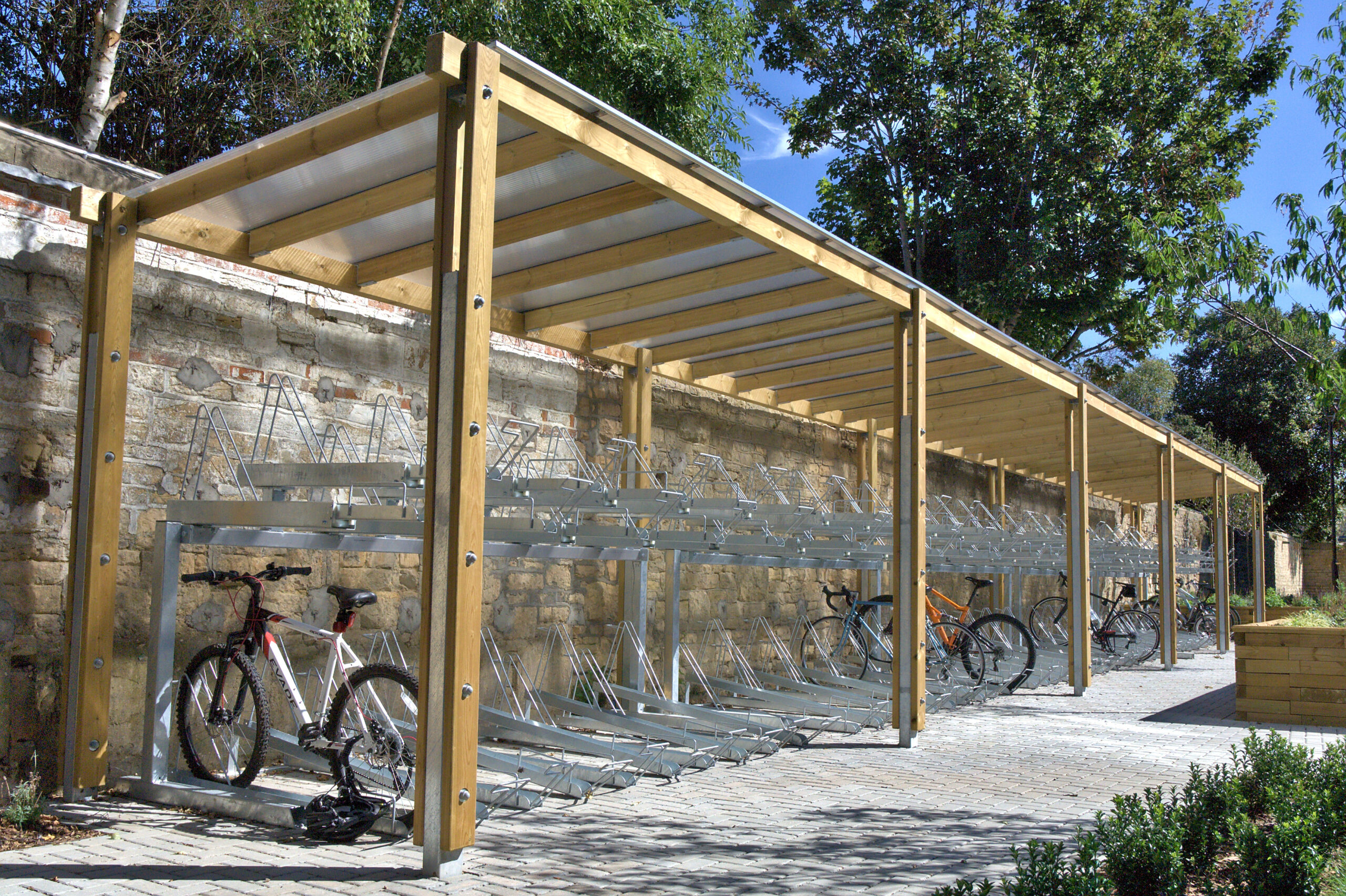
At Langley Design, we design & manufacture a wide range of high-quality, durable and modular cycle parking solutions – from timber shelters that blend seamlessly into landscaped schemes, to compact racks and secure stores designed for high-traffic environments. Our in-house design and consultation team works closely with clients to tailor every solution to the needs of the project and its users.
By combining practical expertise with design flexibility, we help unlock more efficient, more liveable, and more sustainable developments.
Contact the Langley Design team today: we’re here to help you plan smarter, build better, and deliver spaces that work.